
There is nothing more important than your child’s smile!

New Patients

Four young children smiling and hugging while sitting together in a colorful indoor play area

What to Expect When Visiting the Office

At our office, children can enjoy Books, Video Games (X-box, Nintendo DS, and PS3), Trains, Movies, and more, before and even during their appointment! Parents are welcome to accompany their children through the entire appointment as well. Thiel Pediatric Dentistry provides a relaxing atmosphere while delivering a full array of treatments for your child.

The staff at Thiel Pediatric Dentistry takes pride in providing a fun, comfortable visit for each child and their parents. We look forward to caring for your child and making sure each dental visit is a positive and pleasant experience for everyone involved.

Your Child’s First Visit
Your child’s first dental visit is usually short and simple. This visit gives your child an opportunity to meet Dr. Thiel in a non-threatening and friendly manner. We encourage parents to accompany their child during appointments as well. There may be a routine cleaning, if needed, followed by a quick examination by Dr. Thiel. The doctor will go over some basics of oral health care with you and your child, as well as any potential development issues. A fluoride treatment may be done as well. As your child grows and becomes more comfortable with our practice, we will begin to introduce both routine tooth cleaning and x-rays.
The American Academy of Pediatric Dentistry recommends a child be seen for routine examination as soon as they have their first baby tooth (around one year of age). This examination may reveal developmental problems or dental disease, which should be treated early. There is also a great deal of information to teach parents early in their child’s development in order to maintain the best possible oral health for their child. At Thiel Pediatric Dentistry, we see children from birth up through college.
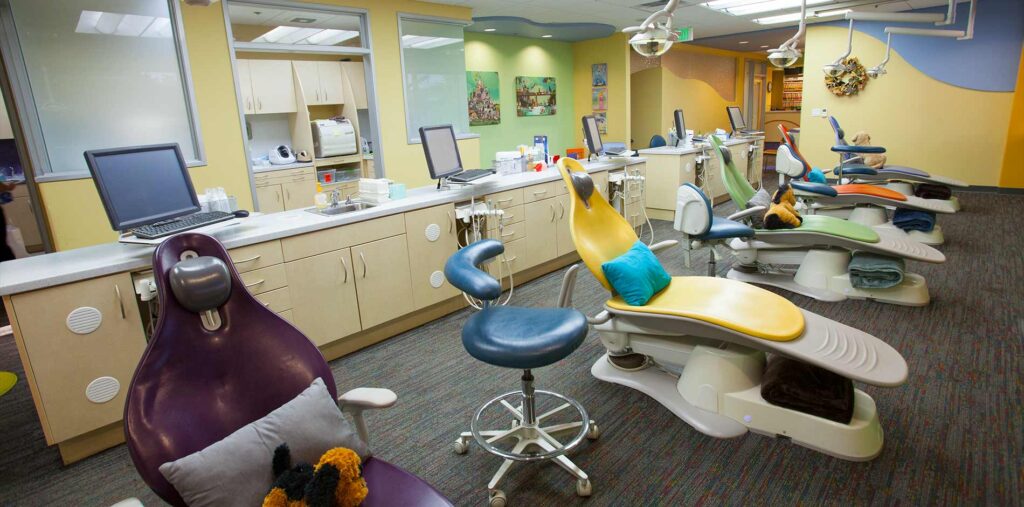
Bright pediatric dental examination room with colorful walls and a dental chair at Thiel Pediatric Dentistry

Payment Options

For your convenience, our office accepts cash, check, Visa, MasterCard, and American Express. CareCredit Healthcare Finance is also available for flexible payment plans. Payment is due at the time of service unless other arrangements have been made in advance by either yourself or your dental plan coverage provider.

Our office accepts assignment from most insurance companies. We are contracted with several insurance companies but, for your convenience, we file out of network claims as well. In many situations, there is actually little to no difference in cost between your in-network vs. out-of-network options; this can also be the case with having insurance vs. not having insurance. It is usually best to check with our office first to go over your options.


Our staff has years of experience working with children’s dental insurance and will be happy to assist you with any questions or concerns you may have. Our Financial Policy also provides additional information.

Return Visits

Most semi-annual check-ups begin with oral hygiene instruction followed by a thorough cleaning and polishing. If needed, both cavity detecting and growth development x-rays will be taken. After the hygienist thoroughly cleans and polishes your child’s teeth, removing plaque and tartar, Dr. Thiel will then perform a routine examination. As recommended by the American Dental Association a topical fluoride application will be administered to help prevent decay and promote strong teeth. Dr. Thiel will provide details to the parent of any necessary or recommended treatments.
The American Academy of Pediatric Dentistry recommends a dental check-up at least twice a year for most children, although some need more frequent visits because of increased risk factors for tooth decay and unusual growth patterns.
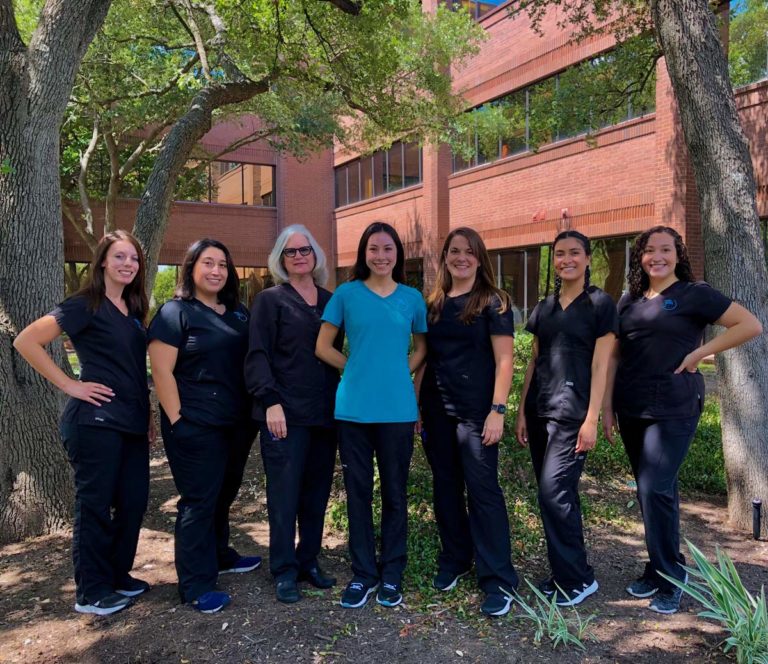
Pediatric dental assistants at Thiel Pediatric Dentistry posing together outside the dental practice

You Can Sign In Now!

For your first visit, there are some forms to fill out before we can get started. You can download the forms now and bring them in with you or fill them out online. The link below will take you to a secure area so your information is kept private.

Tips from Dr. Thiel

Your child’s first tooth
Tooth eruption is the process where a developed tooth grows into the mouth. Tooth eruption can occur as early as 3 or 4 months of age. This development is usually associated with a low grade fever, discomfort, excess drooling, and many children will constantly place their hands in their mouths for comfort. It usually takes a few weeks for a tooth to erupt and using Children’s Tylenol® or Motrin® can help ease discomfort.
Halitosis (bad breath) treatments and prevention
The most common factor of bad breath/halitosis in children is bacteria. People have millions of bacteria throughout their mouth and many of those bacteria emit a foul smell when they over populate. To help reduce the amount of the bacteria it is important to brush the tongue, floss, and try to incorporate a mouthwash into the daily routine.
Chipped teeth happen but they should be treated
Fractured or chipped teeth are fairly common occurrences. Fractures/chips often occur as a result of trauma or due to weakness in the tooth. If your child fractures their tooth, you should contact us for an appointment to evaluate the extent of the injury. When fractured, most teeth can be restored using a white filling material. If a tooth is fractured exposing the nerve, we sometimes place a medicine over the exposed area to help promote the recovery and healing of the nerve tissue.
Loose teeth should be wiggled out
At some point every child will experience having a loose tooth. Primary teeth usually exfoliate (fall out) between the ages of 5 to 13. When a primary (baby) tooth becomes loose due to the normal eruption of the permanent molar we like to encourage our patients to “wiggle” on those baby teeth. Wiggling helps with the loss of the tooth while the gum tissue is healthy and many times causes the tooth to fall out with minimal bleeding or discomfort. If the tooth is loose due to an injury please contact our office so we can evaluate the extent of the injury.
Grinding teeth is expected in young children
Night bruxism (grinding) is very common in children, especially prior to the eruption of the permanent first molars. Some children will show signs of this wear on their teeth but usually there is very little sensitivity with these teeth. We do not typically create night-guards to wear for grinding since the habit will most likely depart within a couple of years.
Thumb sucking… How to break the habit
Thumb sucking is a normal developmental process for infants and young children. The habit many times will stop without help around age 3, but sometimes it is a difficult habit to break. Children who continue this habit usually do it to relax, beat boredom, or fall asleep. If your child has not dropped the habit by age 5, stay positive and try discussing it with them. Another option is to place a bandage (band-aid) on their thumb, this may change the sensation the child receives from thumb sucking. Avoid using a bad tasting liquid to prevent thumb sucking, depending on what is used, this method may not be safe for your child.
Diet affects the development of your child’s teeth
Diet is a very important aspect in dental health. Children with high sugar or carbohydrate diets are at greater risk for developing cavities. In addition frequent eating or snacking throughout the day will increase the risk for cavities as well. Help your child choose healthy low sugar natural snacks and set up a daily routine for their meals and snacks. This will help provide you the good defense against developing dental decay.
Teething… What should be expected
Teething is a natural process where primary (baby) teeth grow through the gum tissue into the mouth. Many times this process is preceded by discomfort, fever, drooling, and the child chewing on anything within reach. Once the teeth push through the gum tissue, the discomfort usually subsides. Soothe gums with a clean, chilled teething ring or gentle gum massage; if a low-grade fever or discomfort persists, ask our office or your pediatrician about using Children’s Tylenol®.
Young girl smiling during a dental visit while a dental professional examines her teeth